
















World Environment Day: VJ Engineering’s CSR Project
Project Title: BEAT THE PLASTICS: TRACKING PLAYGROUND WASTE IN KLANG COMMUNITY
Team Members:
- Nurul Azira Wan Zahari
- Batrisyia Aina Kamaruzaini
- Balqis Hannanie Ahmad Zaki
Introduction
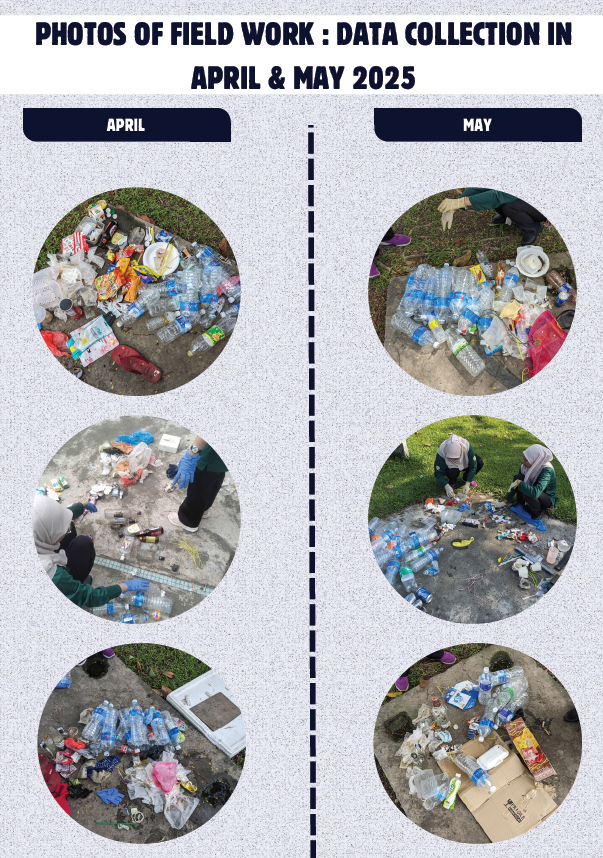
This project was conducted every Thursday throughout April and May 2025 at three selected playgrounds within a residential area in Klang, Selangor, Malaysia. It focused on plastic waste due to its significant and long-lasting environmental impact. As plastic is non-biodegradable, it does not decompose naturally and can persist in the environment for decades. If not properly managed, it contributes to land and water pollution, posing serious threats to both wildlife and human health.
Objective
- To quantify and categorize plastic waste collected in three playgrounds within a residential area.
- To identify patterns or trends in waste generation over time.
- To raise environmental awareness and encourage proper waste separation practices within the local community.
Methodology
- Debris collection conducted every Thursday at three selected areas.
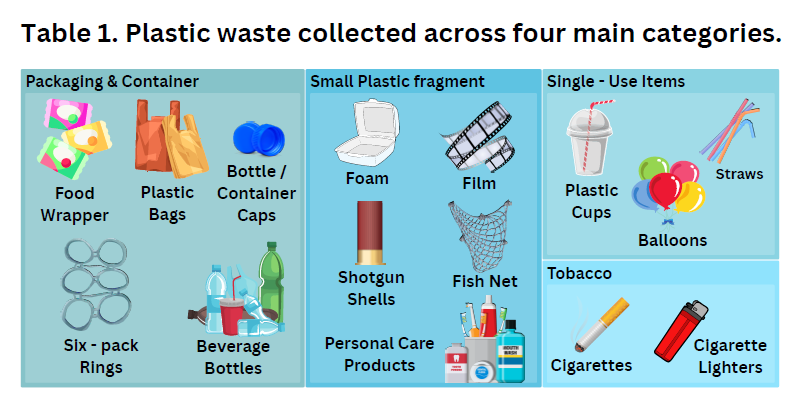
- Classification of debris by type and material.
- Data analysis using standardized apps (Marine Debris Tracker App Powered by Morgan Stanley & National Geographic Society)
Results
Between April and May 2025, we collected plastic waste from three playgrounds in Klang, Selangor. The most common items were packaging and containers —559 pieces in April, dropping to 391 in May. Single-use plastics went down a little, from 67 to 61 pieces. Interestingly, tobacco-related waste nearly doubled, going from 45 pieces in April to 109 in May. Small plastic fragments and other waste also increased, from 25 to 41 pieces.
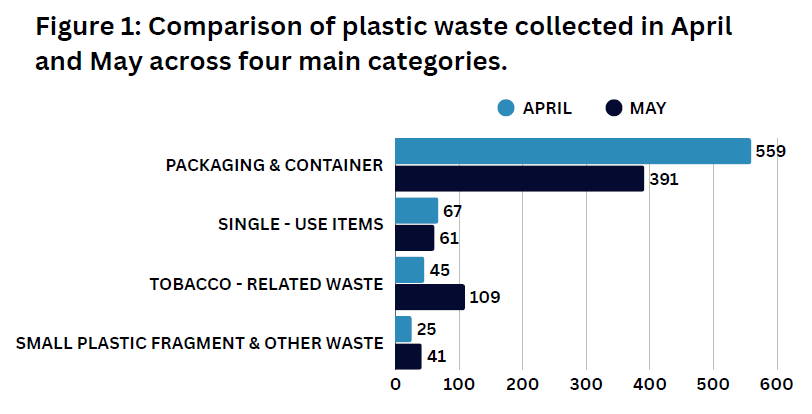 This shows that plastic pollution is still a big issue in places where kids play, reminding us how important it is to manage waste properly and keep our playgrounds clean and safe.
Conclusion
This project successfully quantified and categorized plastic waste collected from three playgrounds in a residential area, revealing clear patterns over the two months. Packaging and tobacco-related waste were the most common and need urgent attention. By understanding these trends, we can better focus on reducing plastic pollution. Most importantly, the findings emphasize the need to raise environmental awareness and promote proper waste separation within the local community to keep playgrounds clean and safe—especially for children who play there every day.