

















Restoring India’s Waterways — A Step Toward Sustainable Aquatic Management
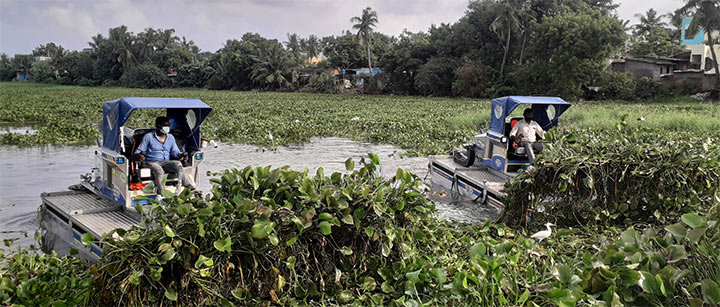
The Challenge: A Spreading Green Threat
Across several states in India, particularly in large lakes and urban waterways, the rapid spread of water hyacinths has created a serious environmental and infrastructural crisis. These invasive plants choke stormwater drains, block irrigation canals, and halt inland navigation. Following the monsoon season, the situation worsens significantly as the floating weeds form thick mats that also trap urban waste, disrupt fishing livelihoods, and foster breeding grounds for disease-carrying mosquitoes.
Initial Approaches: Limited Reach and High Risk
Before mechanized solutions were introduced, efforts to tackle the problem were predominantly manual. Local authorities relied on rope-pulling, small boats, or excavators operating from the embankments. These methods were not only labor- intensive and slow but also limited in reach, often failing to clear waterways completely and leading to frequent re-infestation. Moreover, safety remained a major concern for workers exposed to polluted water.
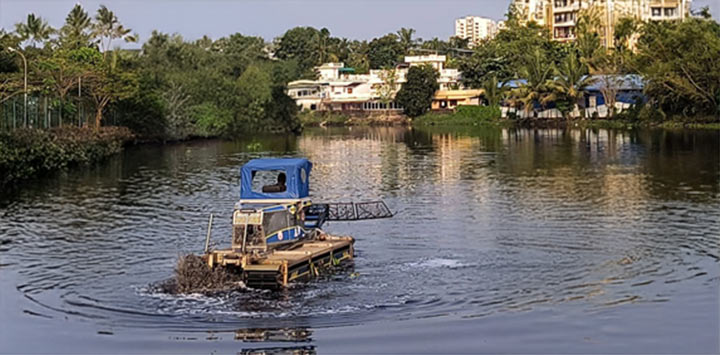
The Outcome: Clean Water and Clear Benefits
The results were immediate and impactful. Large areas were cleared swiftly, operational costs were reduced, and the safety of personnel greatly improved. Local communities benefited from cleaner waterways, improved flood resilience, and the revival of fishing and transportation routes. In some areas, the collected plant biomass even sparked interest for use in composting and biogas production — turning a crisis into an opportunity for circular solutions.
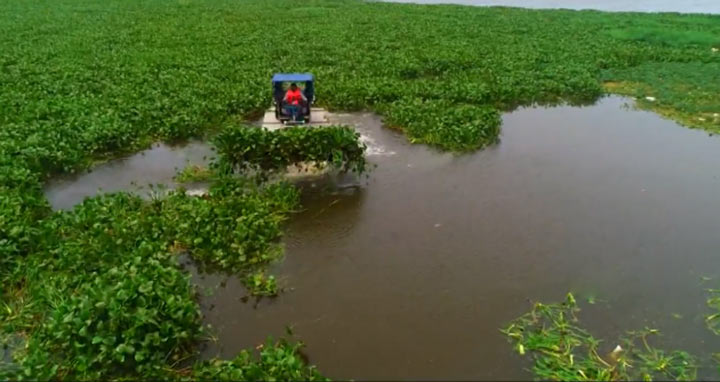
Turning Point: A Coordinated Response
A more structured and urgent response began when municipal corporations and transport authorities flagged frequent service disruptions and flood risks. This prompted collaborative pilot clean-up drives involving local teams, NGOs, and engineers like Kishore and his team at Matprop. These early efforts revealed the pressing need for a scalable, more efficient solution.
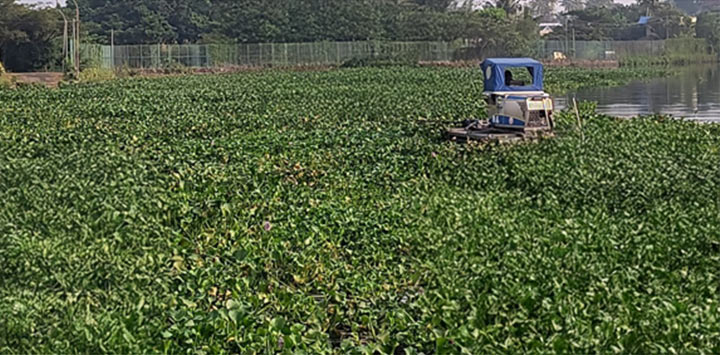
A Smarter Solution: Truxor
During a technology scan for amphibious weed removal equipment, Matprop discovered Truxor, designed for shallow and swampy terrains with modular tools and excellent maneuverability. It was this versatility that caught their attention. The first trial took place in 2013 in a heavily clogged canal system near Alleppey, Kerala. The machine was launched directly into the water and steered with ease through narrow and shallow channels. Using a raking tool attachment, the team was able to pull thick mats of water hyacinths to the shore for collection. What impressed the team most was the machine’s ability to enter and exit waterbodies independently — even on steep banks — which eliminated the need for complex site preparations.